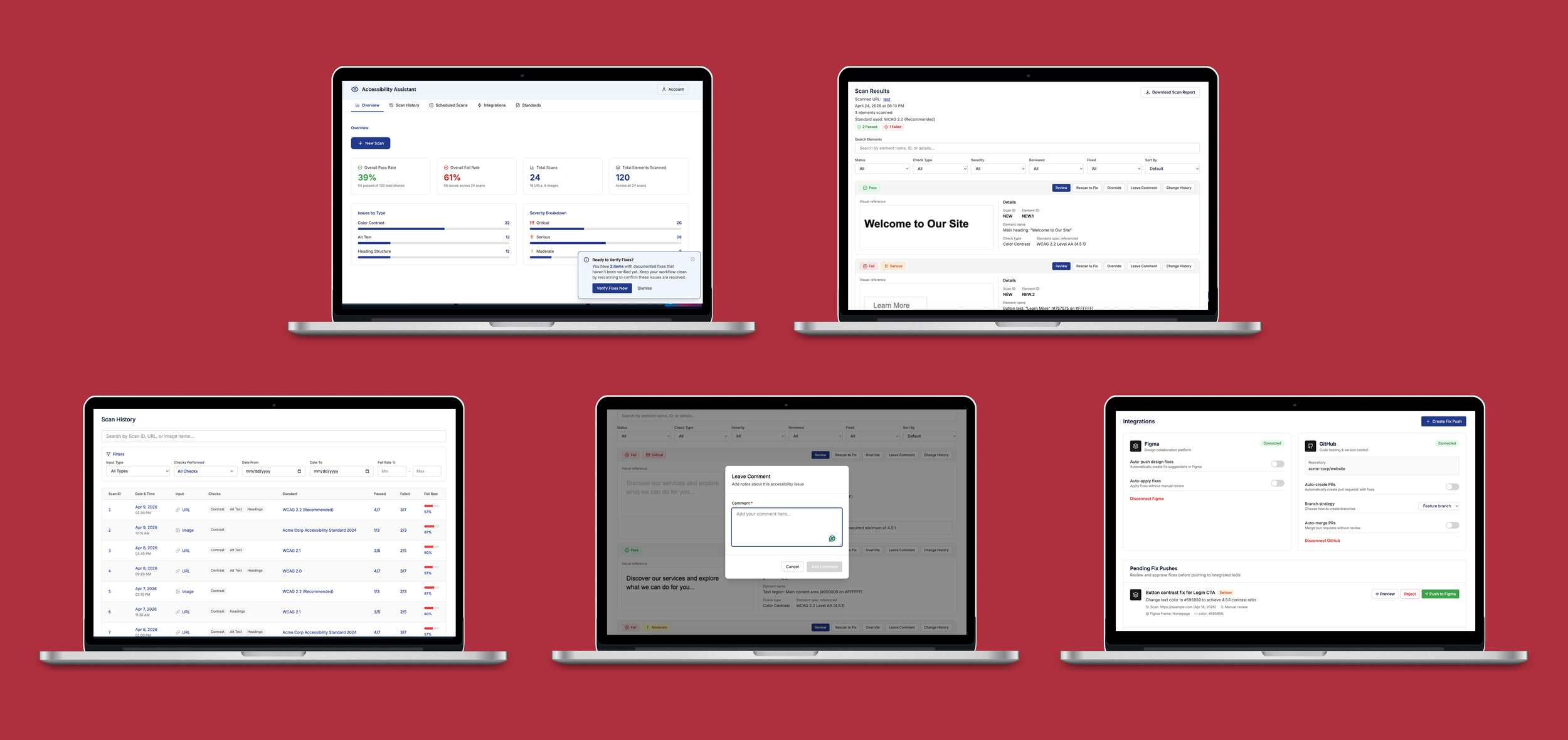
Accessibility Assistant
Project Background
Project Type
Capstone
Timeline
March-April 2026
Project Type
Discovery, Research, Prototyping & Testing, AI-Powered Design, Vibe Coding
Fidelity
Mid-fidelity with placeholder content and mock data
For my Stanford University certificate course, UX/UI Design for AI Products, I completed a Capstone project as my final deliverable. The process spanned discovery, research, design, testing, and iteration.
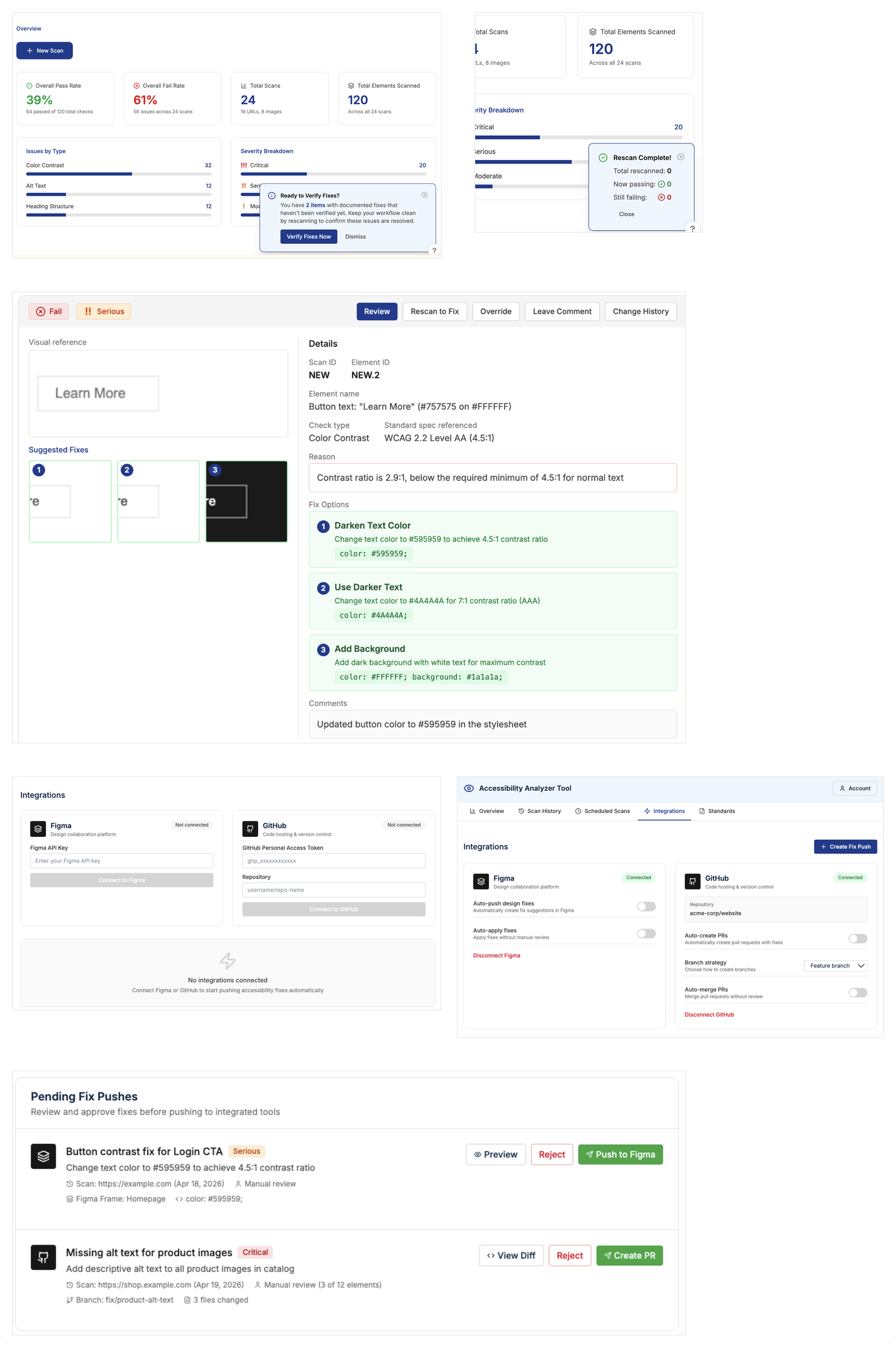
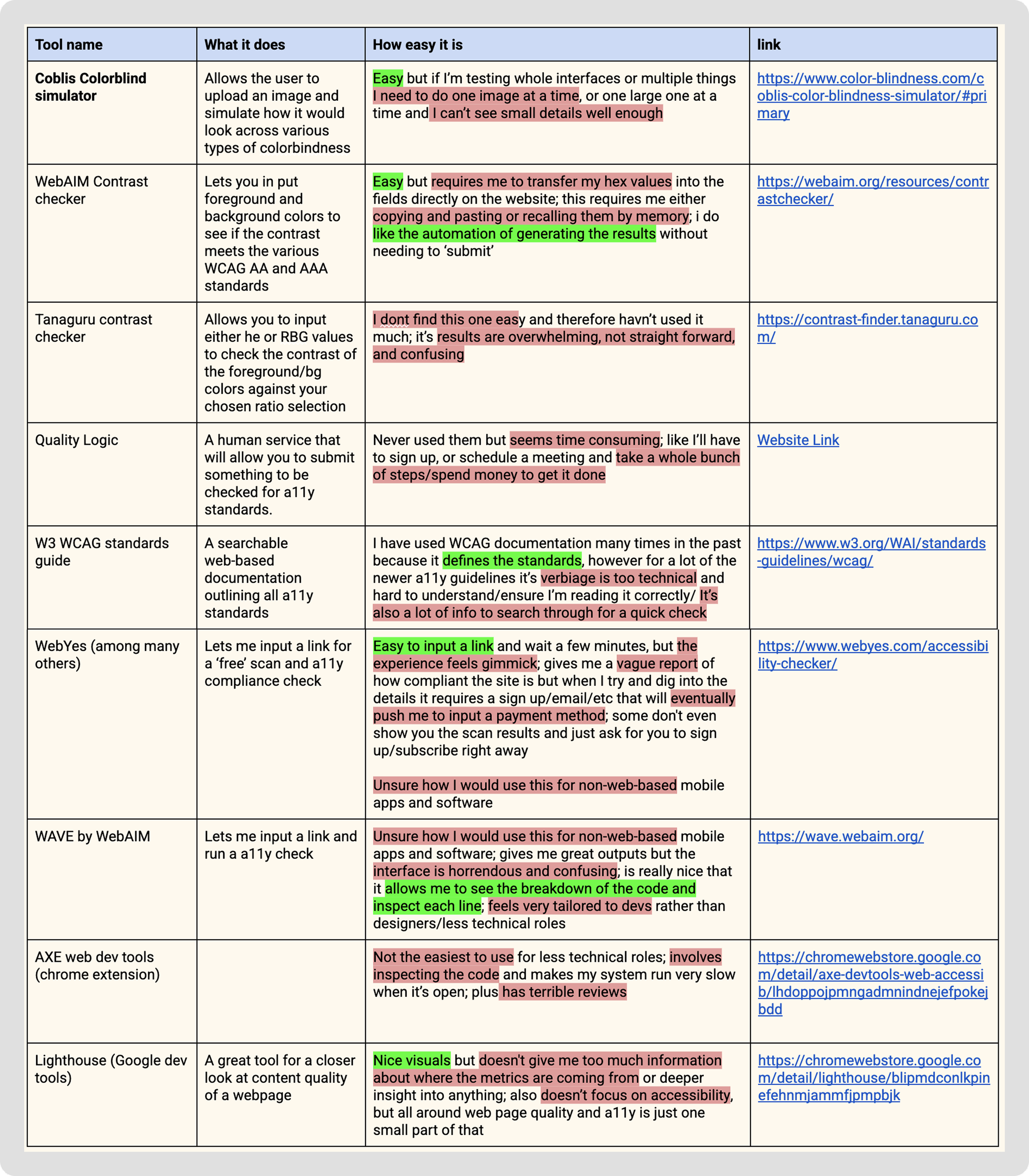
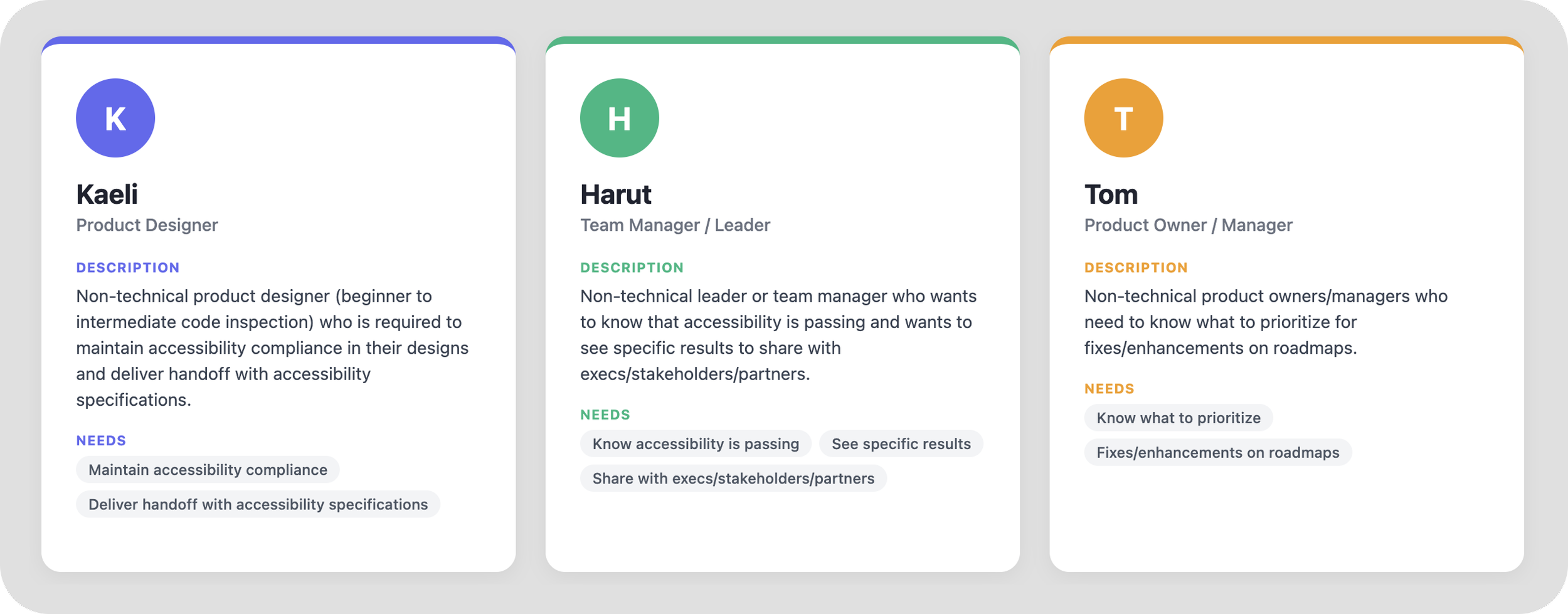
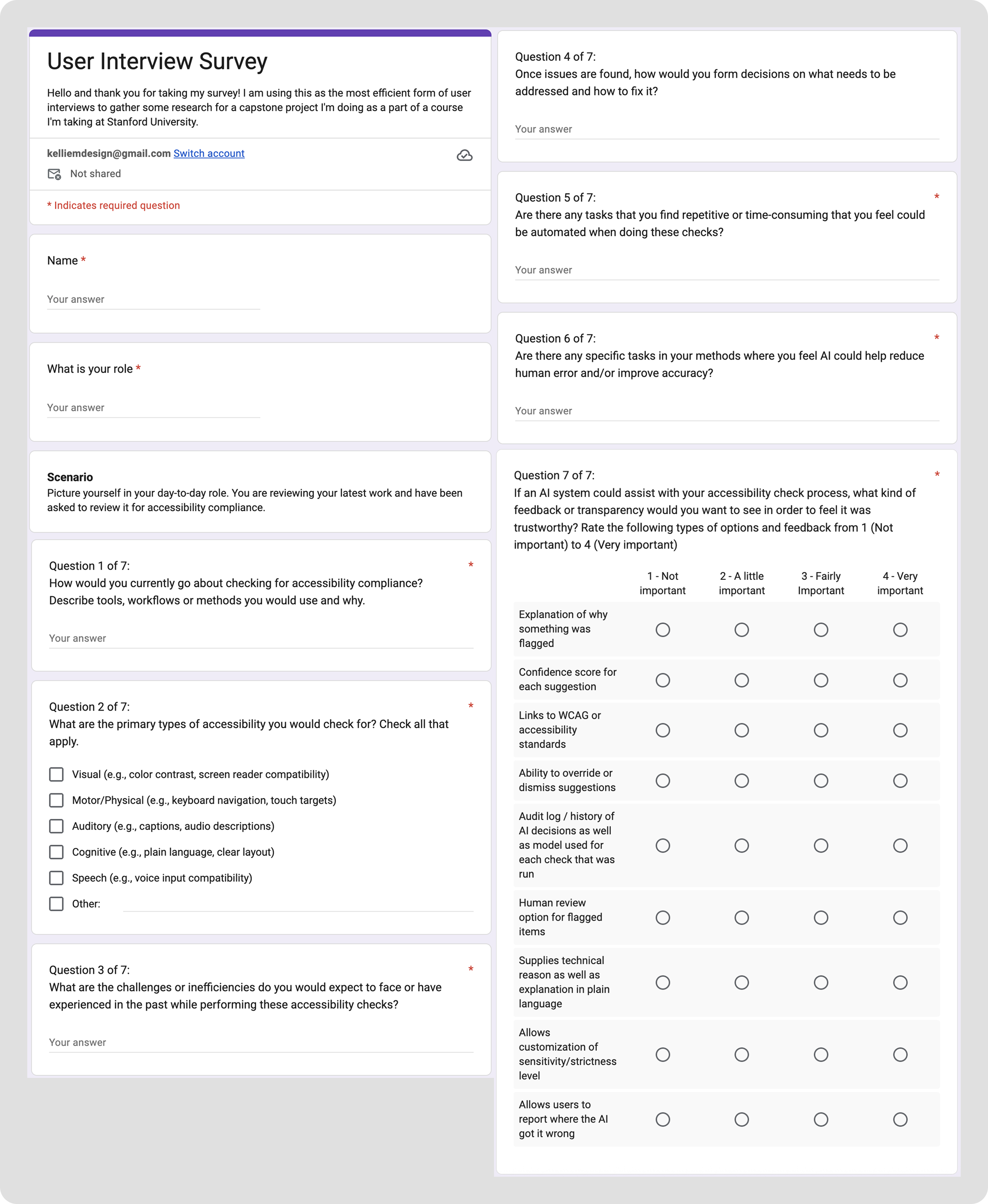
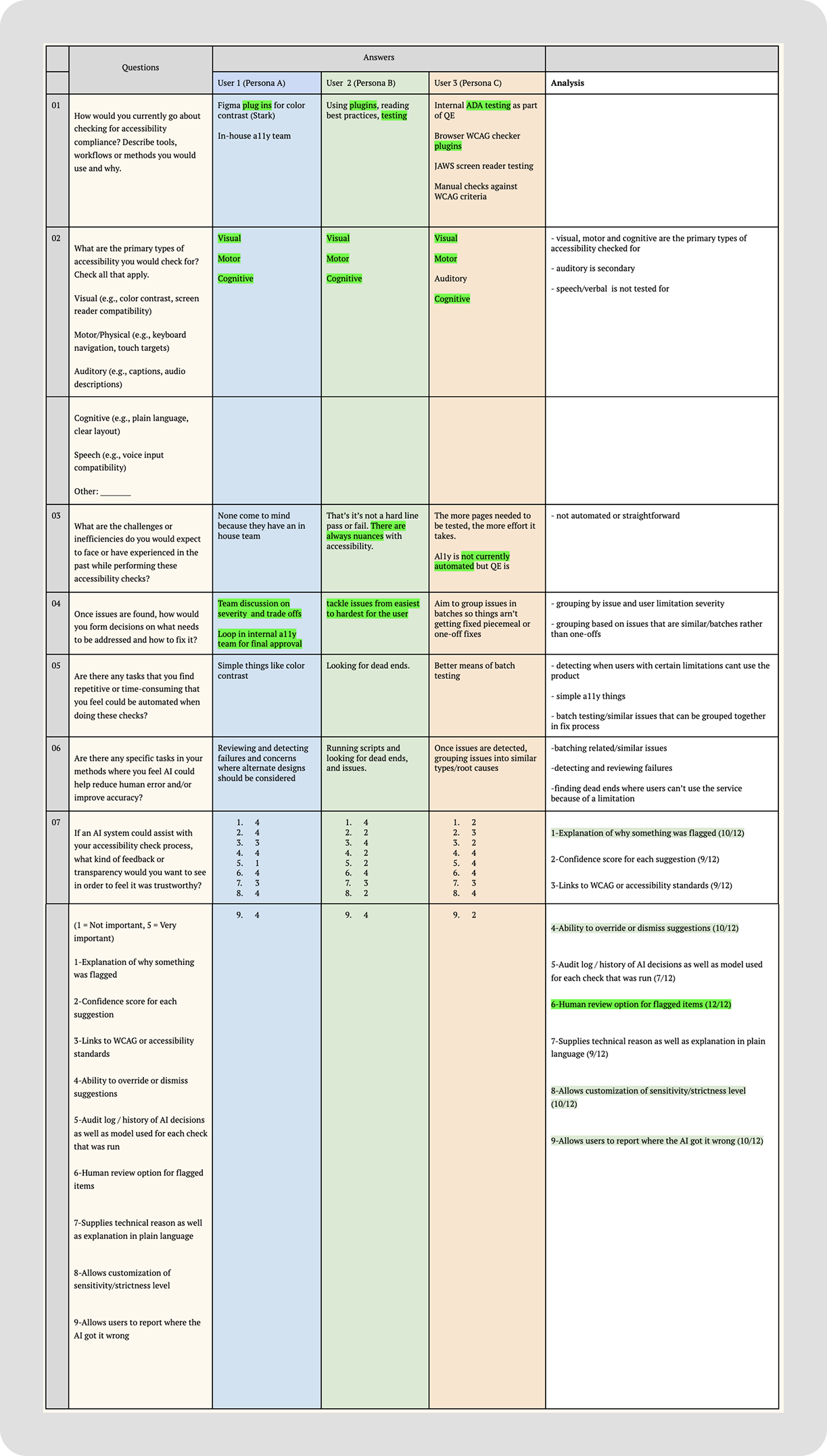
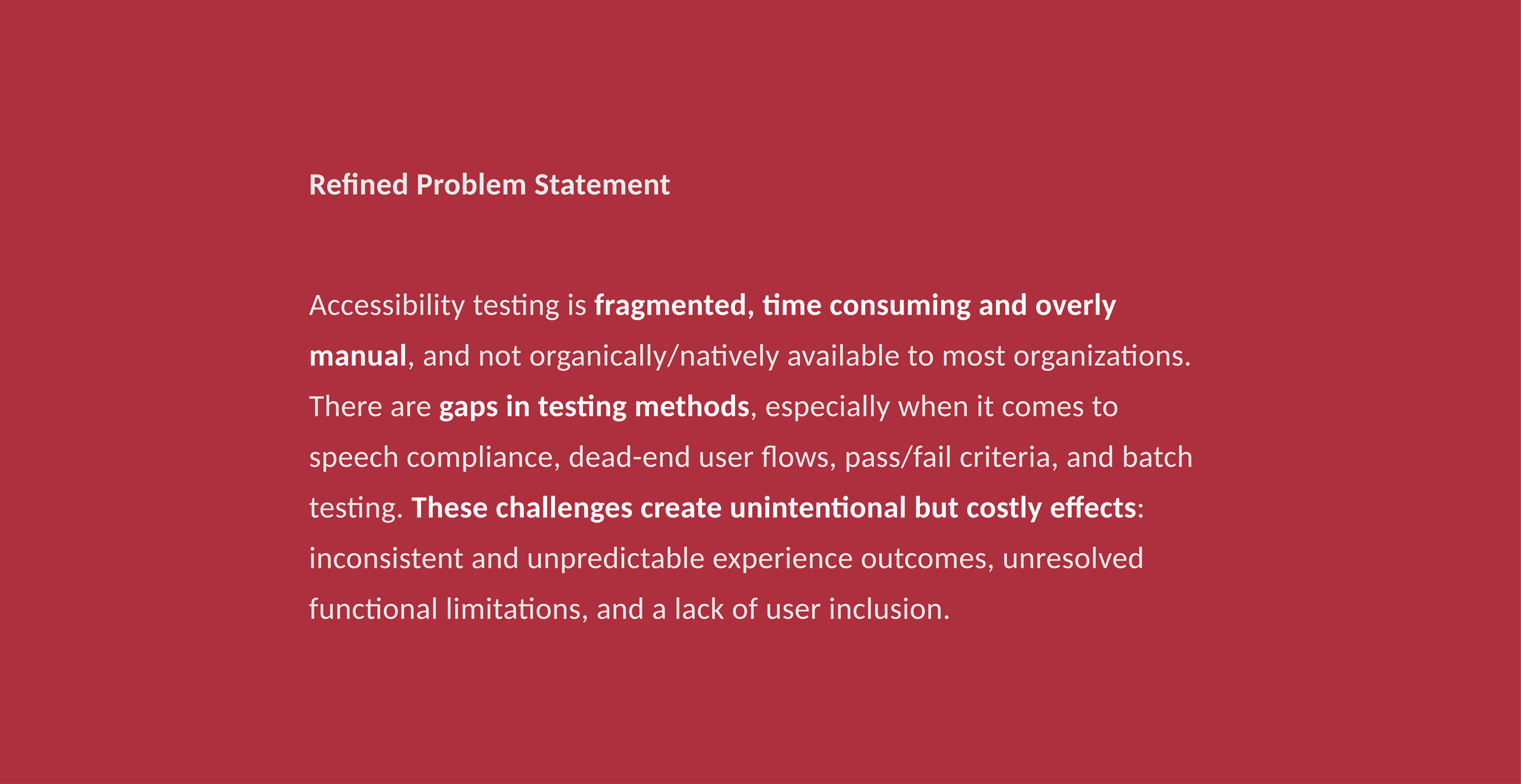
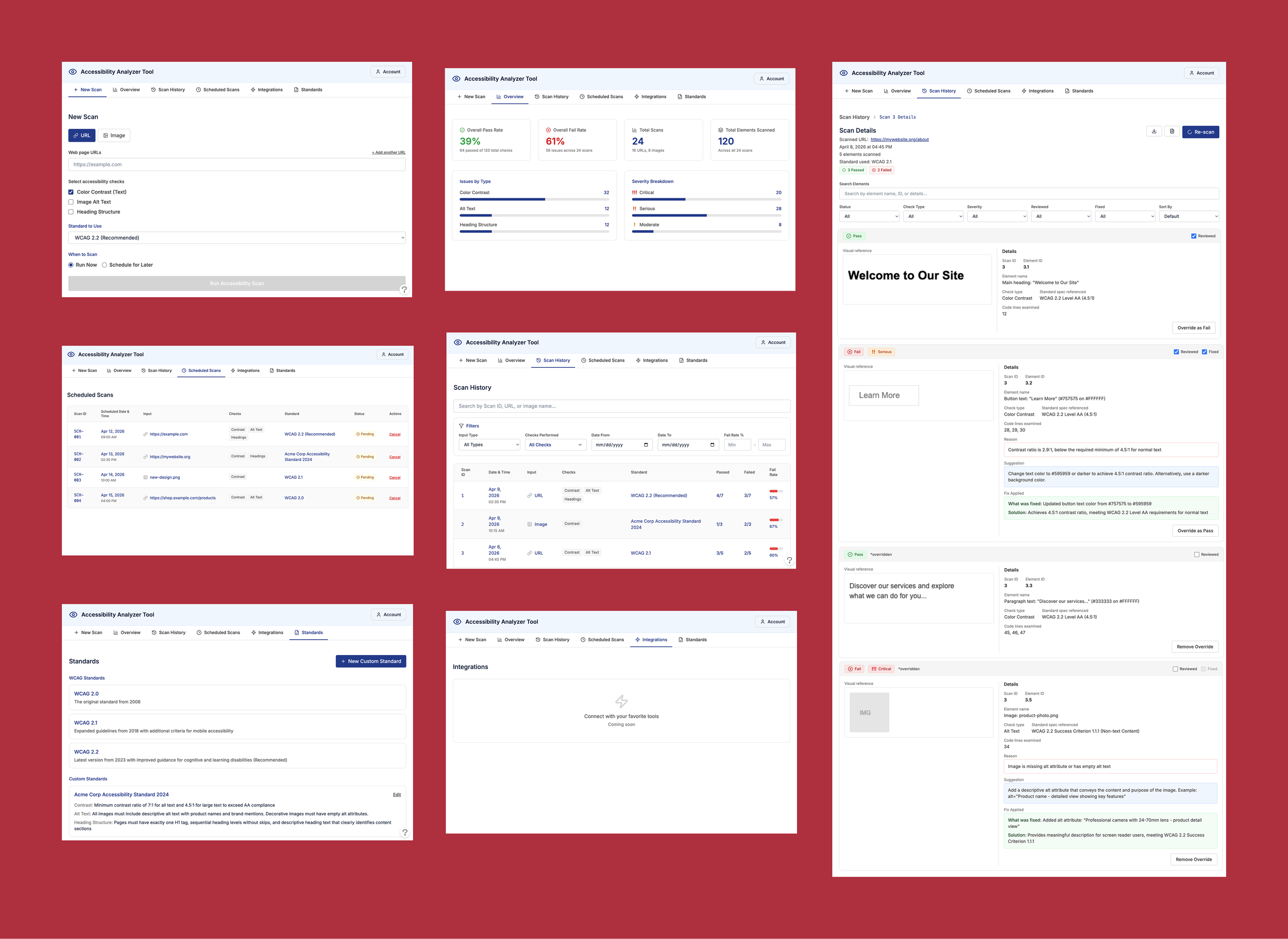
During discovery and research, I explored gaps in the current market, conducted user interviews and competitive analyses, and defined a problem statement, use cases, and opportunities. Moving into design, I utilized Figma Make to create a functional prototype capturing the look and feel of my solution. I also built a lo-fi Wizard of Oz prototype using flashcards to represent key touchpoints and workflow steps for core tasks.
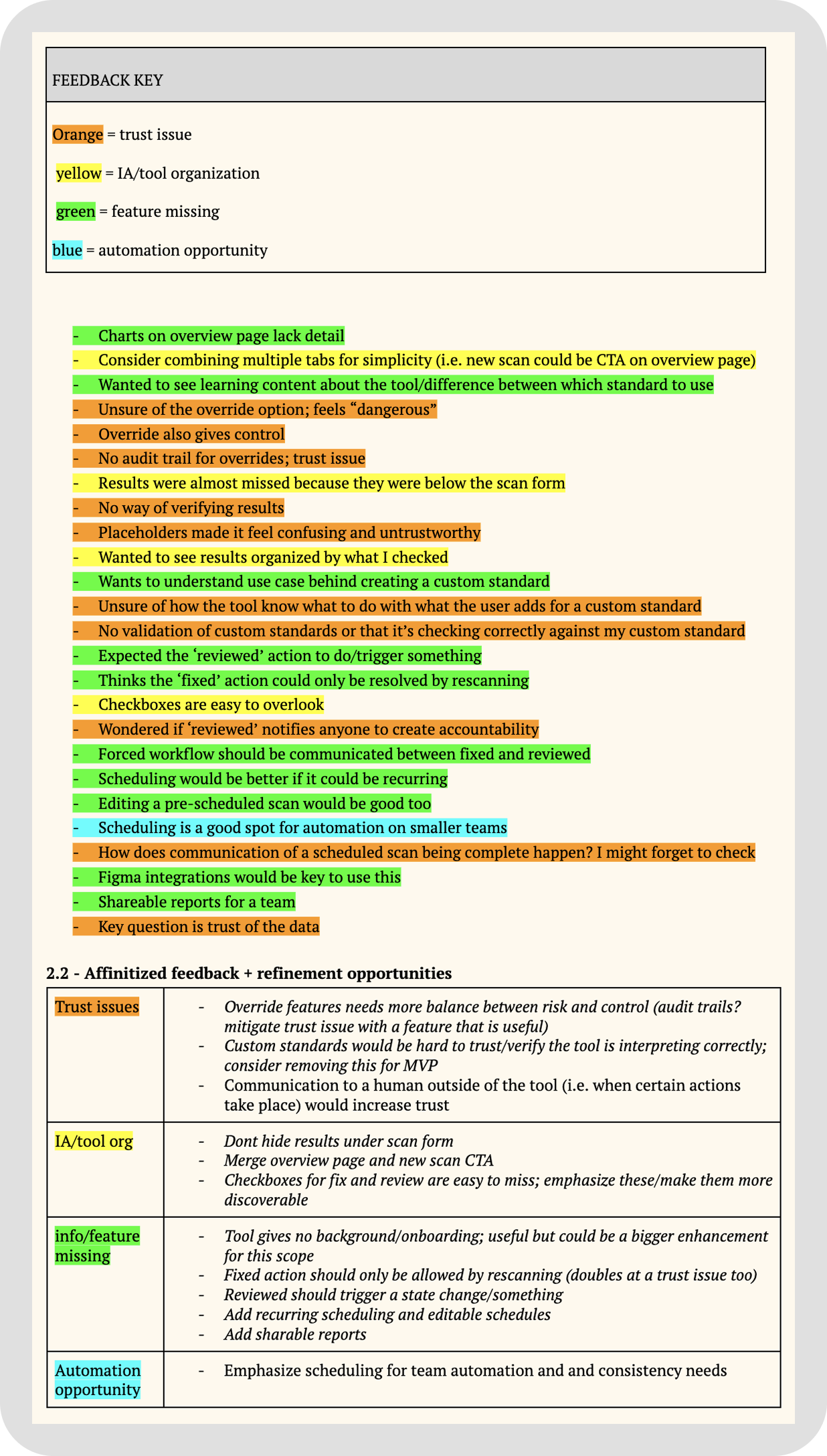
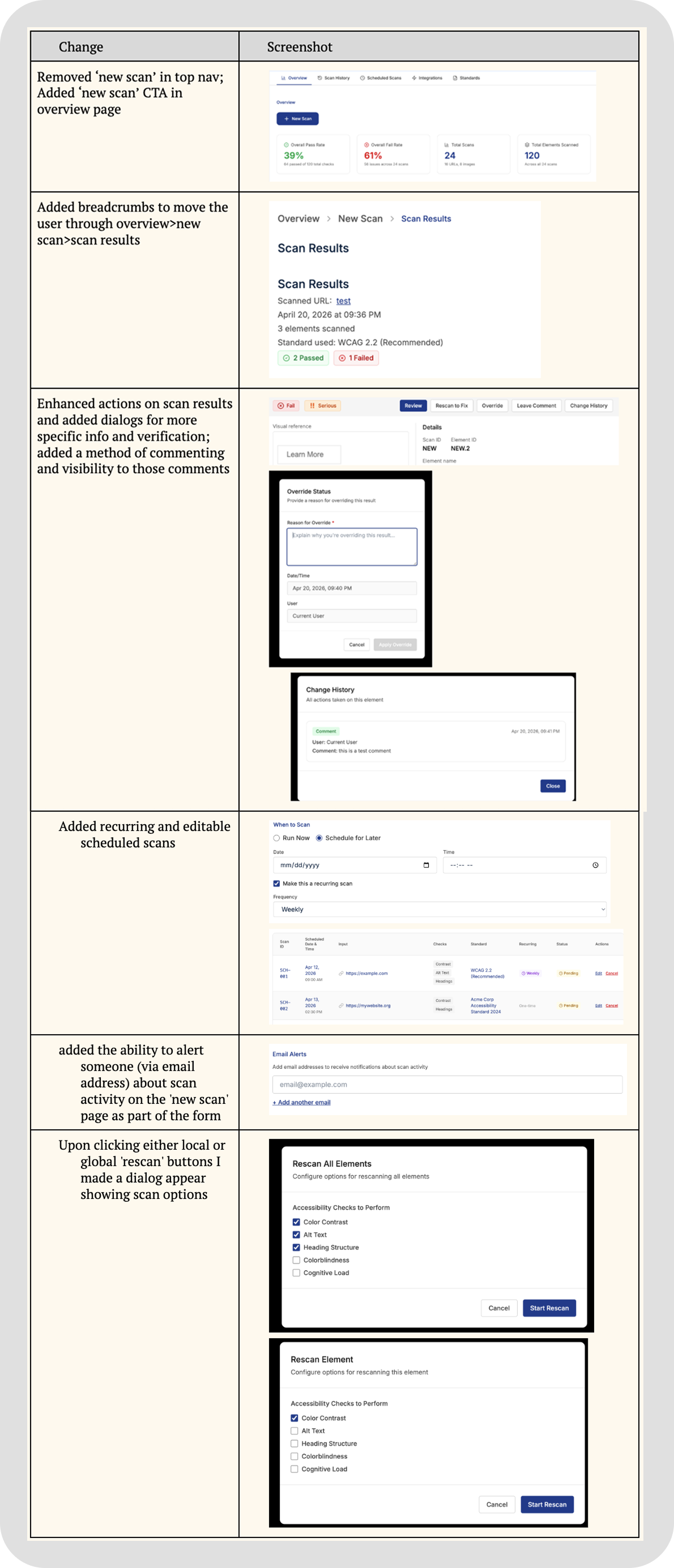
I tested both prototypes with real users, drew insights from their feedback, and iterated towards a final functional prototype. The final deliverable leverages a seamless AI system, complementary opt-in AI features, and a balance between automation and human control to maintain confidence and grow trust.
Discovery & Research
Assumption
I don’t think a tool exists that provides a great way to be checking all aspects of digital accessibility. There are tons of tools, guidelines and standards to reference and use to test certain types of accessibility, but I’ve never come across a one-stop tool that works well across all types and reduces or removes manual entry/work.
Relevance
In a day and age where tech and AI is at its peak, accessibility will (and should) become more important than ever. I predict that the future of design will shift to function-first, and that accessibility will become one of the biggest standards of design that we have.
Competitive Analysis
Personas & User Interviews
Design & Prototyping
Hi-Fi Prototype: Initial Prompt
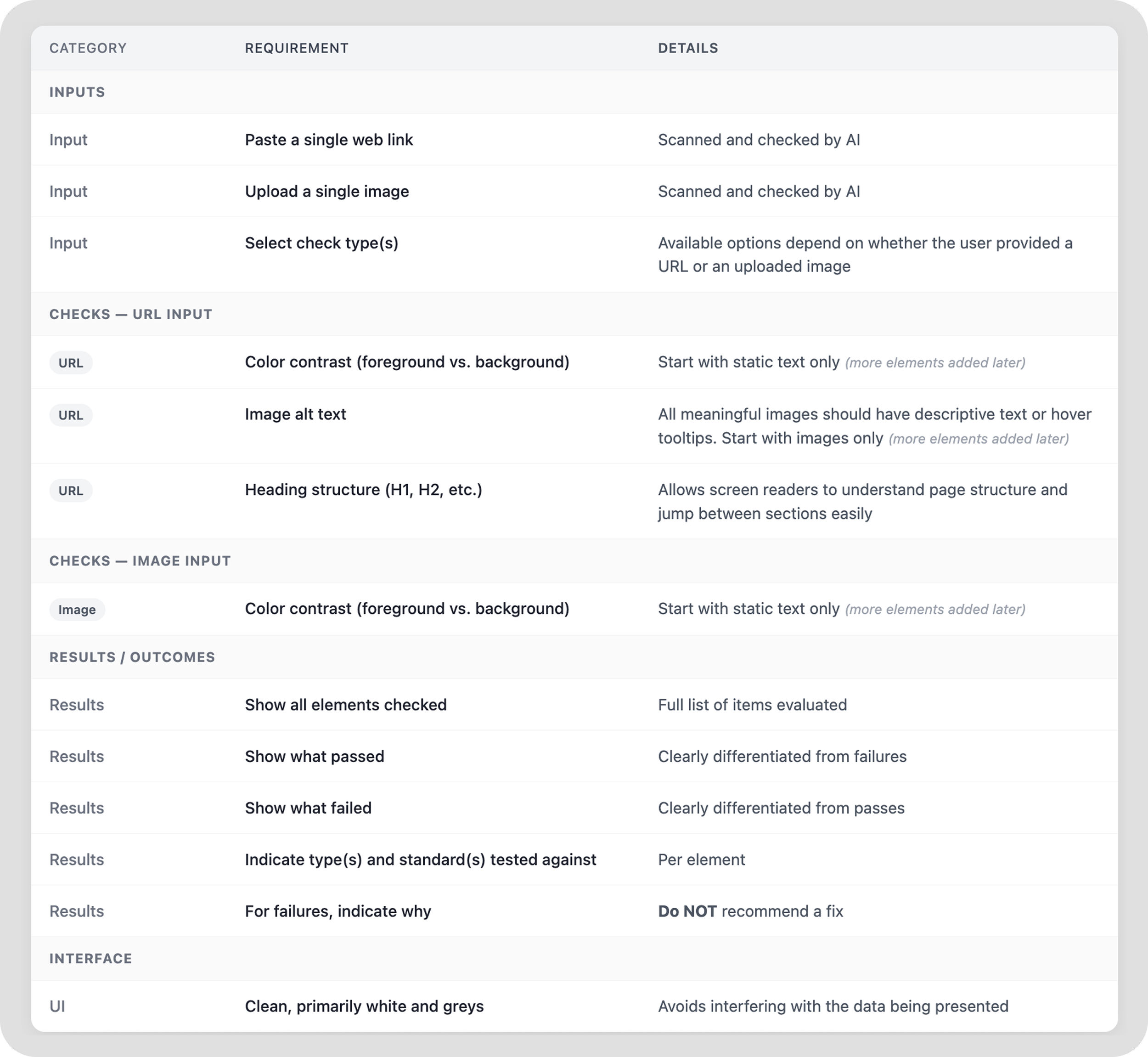
“I’m looking to create an accessibility checker that can be used by designers and non-technical roles that is quick, simple, accurate and reliable and uses WCAG 2.2 accessibility guidelines as the default standards for the tool. I'm going to start with a few basic capabilities to target an MVP version of the tool:
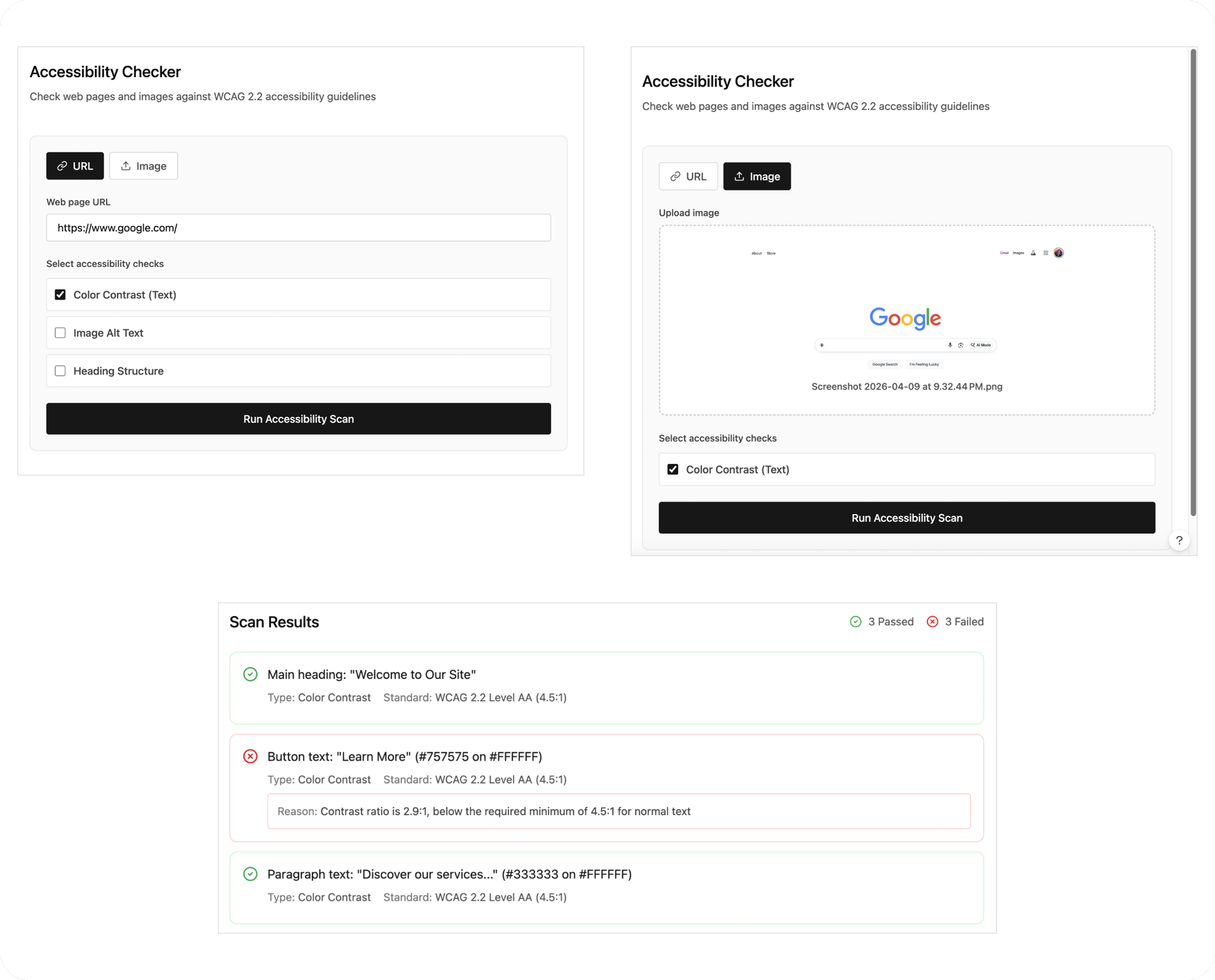
Hi-Fi Prototype: Initial Outputs
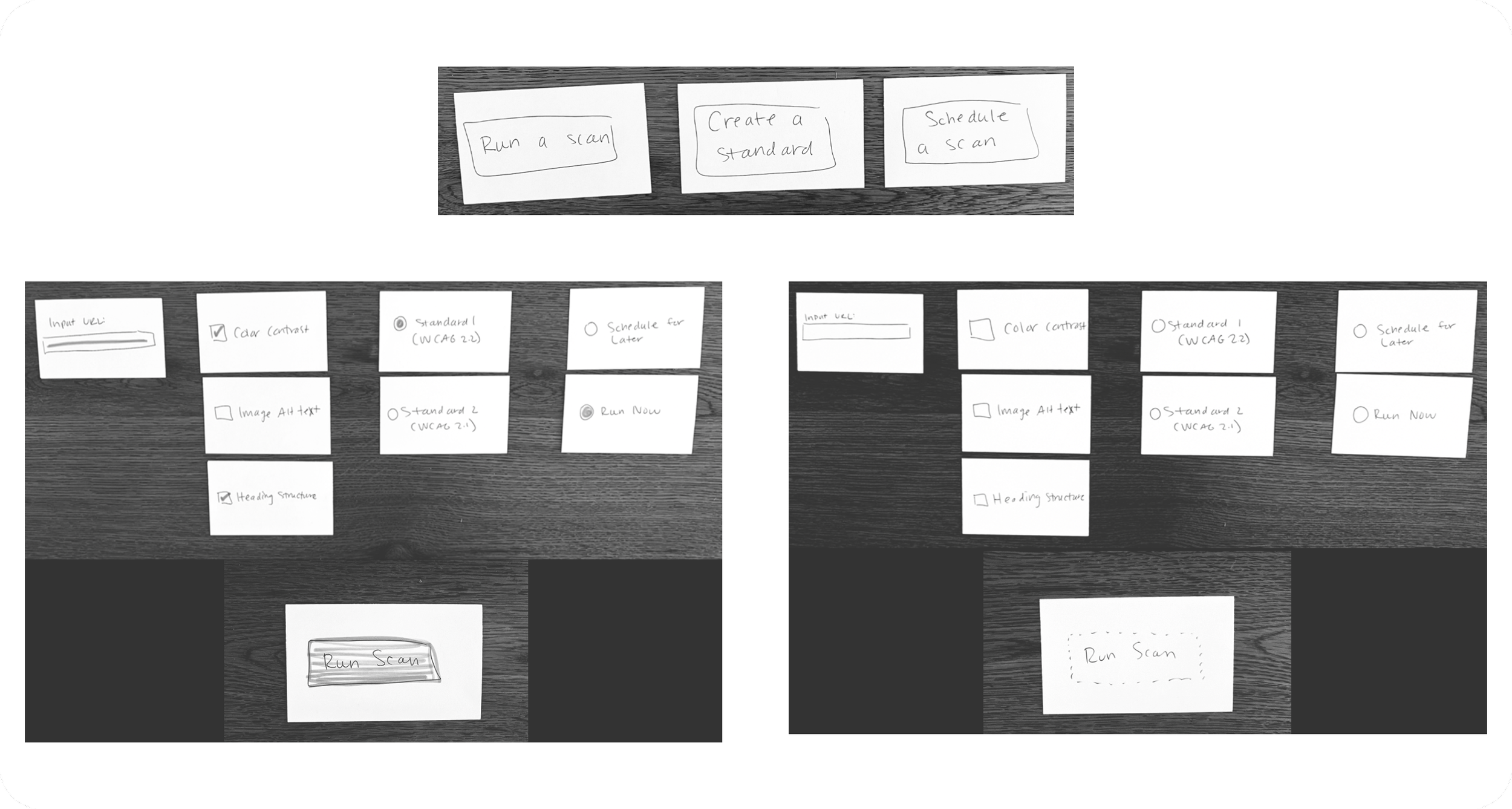
Lo-Fi Wizard of Oz Prototype
Testing & Refinement
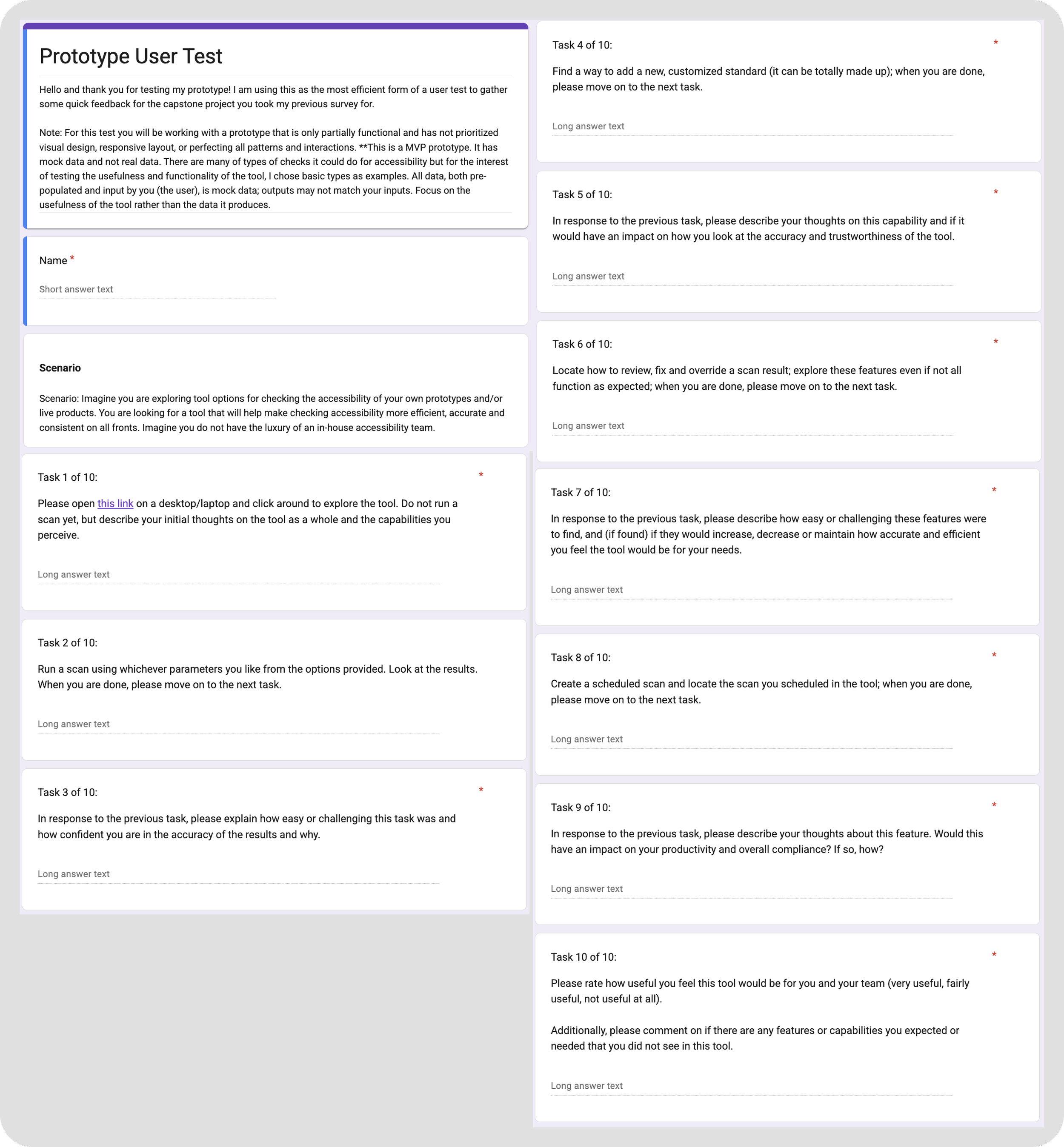
Test Plan & Results
Iterations & AI Feature Additions